Context
What waterfall enrichment is
Waterfall enrichment is dead simple in concept. You have a list of contacts. You need emails, phone numbers, or firmographic data. No single provider has everything, so you query multiple providers in sequence, falling through from one to the next until you get a match.
Provider A returns nothing for a contact? Try Provider B. Still nothing? Provider C. The "waterfall" is just the sequential fallback logic.
The reason this matters: single-provider enrichment commonly leaves coverage gaps. Waterfall enrichment improves match rates by querying multiple providers in sequence. Specific lift varies by ICP and region.
The useful comparison is not the number of logos on a vendor page. It is whether the system records which provider ran, what it returned, why the result was accepted, what the attempt cost, and whether the same run can be reproduced.
Why match rates vary
The match-rate gap most teams overlook
Every provider will show its strongest coverage story. That number is meaningless without context. Match rates depend on:
- ICP geography. US-heavy lists favor Apollo and ZoomInfo. European lists favor Dropcontact and Prospeo.
- Company size. Enterprise contacts are well-indexed everywhere. SMB founders are in maybe one database.
- Data freshness. Contact records change over time, so a benchmark must record when each result was returned and validated.
- Title seniority. C-suite contacts are over-represented in most databases. Individual contributors are sparse.
Adding providers can improve coverage, but the lift and cost depend on provider order and the input population. The important question is not just which tool can run a waterfall. It is whether an agent, script, or app can run the same process with visible validation and provenance.
Method
Run a benchmark you can reproduce
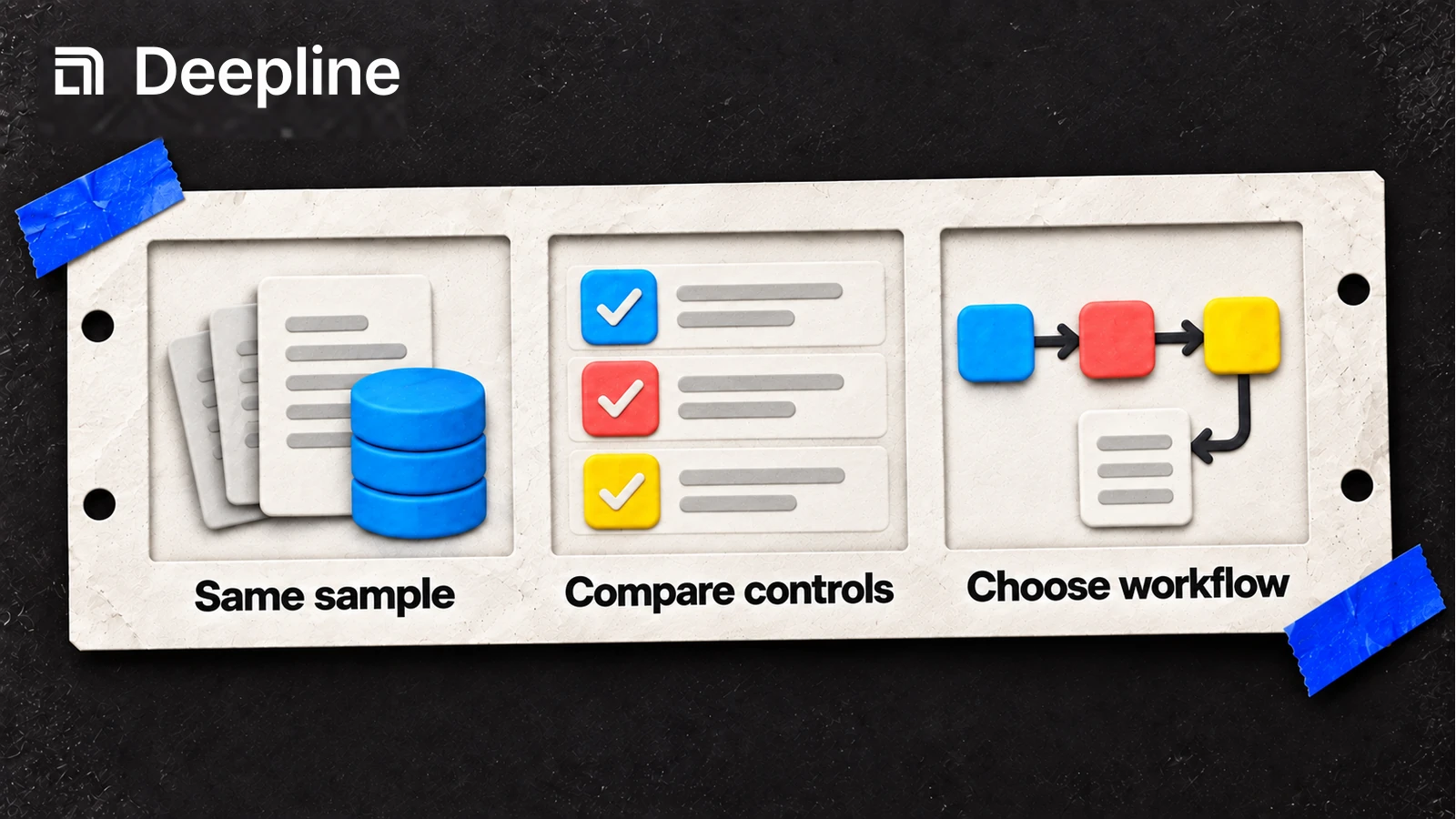
This page does not claim a universal match-rate ranking. A useful test must use the same permissioned records, expected fields, validation rules, and provider order for every system.
- Sample records across the geographies, company sizes, and seniority bands in your real ICP.
- Freeze the input set and record an expected result only when you have permission and a reliable ground truth.
- Run each provider or waterfall against the same inputs and timestamp every attempt.
- Validate email and phone results with the same rules.
- Report verified-result rate, false-positive rate, latency, and customer-visible Deepline usage per verified result.
- Publish misses and invalid results as well as successful matches.
Download the benchmark CSV template. It includes provider order, result status, validation status, latency, cost, and notes so another team can audit the result.
Comparison
Tool-by-tool comparison
| Tool | Type | Waterfall support | Workflow model | Agent/API access |
|---|---|---|---|---|
| Deepline | SDK/API orchestrator | Built-in across 113+ integrations | Process as code | Full CLI + API + Claude Code skills |
| Clay | Visual workflow builder | Built-in multi-provider workflows | Workspace tables and templates | API available; product is UI-primary |
| BetterContact | Waterfall-only | Built-in email waterfall | Email waterfall workflow | API available |
| Cleanlist | Waterfall-only | Built-in enrichment and verification | Verification and enrichment workflow | API available |
| FullEnrich | Waterfall-only | Built-in email and phone waterfall | Email and phone waterfall workflow | API available |
| Amplemarket | Sales platform | Built-in, proprietary | Managed sales platform | Product-managed workflow surface |
| Databar | No-code enrichment | Manual chaining | No-code tables | API available |
Deepline
Deepline is built for agent and API workflows. You can bring your own provider keys, use Deepline-managed keys, and choose the provider order. Deepline handles fallback, deduplication, field merging, and metered compute when the workflow uses Deepline data, agents, or web workers.
The useful difference is not the marketing label. A coding agent can call Deepline directly. The Play run writes the waterfall rows to a Runtime Sheet. Inspect the rows before you export the dataset.
A March 2026 r/agenticsales thread on ditching an AI SDR subscription and rebuilding the workflow in Claude Code is a good example of the exact workflow Deepline is built for.
Clay
The most well-known name in enrichment orchestration. Clay's own pricing page and coverage guide show why it became the default visual waterfall tool: broad provider access, a familiar table model, and a large ecosystem.
The tradeoff: Clay is spreadsheet-shaped. Every workflow starts in a browser-based table. If you want to call Clay from an agent, you can use the API, but the product still centers the human operator and the workspace.
BetterContact
Built for managed email enrichment. Give it contacts and it runs a provider waterfall. It is a focused option when email finding matters more than building a broader GTM workflow.
Limited beyond email. No firmographic enrichment, no job change detection, no phone waterfall (though they are adding it). Good for teams that just need email match-rate lift and nothing else.
Cleanlist
Similar to BetterContact but positions itself more on data quality, combining verification and cleaning with enrichment.
FullEnrich
FullEnrich offers managed email and phone enrichment through a web application and API. Evaluate its current provider coverage and API limits against your benchmark before committing.
Amplemarket
Amplemarket packages enrichment inside a broader managed sales platform. It fits teams that want data, engagement, and deliverability in one product. Compare it as a full platform rather than as a standalone provider router.
Databar
Databar is a no-code, table-oriented enrichment product with API access. Check whether its workflow and provider-order controls match the way you want to run and audit a waterfall.
Agent-native
The agent-native option: why it matters now
GTM teams are moving enrichment into agent workflows. A March 2026 r/ClaudeAI thread on prospecting with Claude Code + MCP, a second r/ClaudeAI thread on building Claude Code skills for B2B Sales/GTM, and ColdIQ's post How Claude Code Builds an Entire Outbound Campaign in Under 20 Minutes all show the same operational pattern.
This works best when enrichment is callable through an API or CLI and returns structured results. A browser handoff can still work, but it interrupts unattended execution and makes replay harder.
Deepline is the enrichment layer built for this pattern:
- SDKs and APIs: agents and apps call Deepline directly instead of asking a human to finish the workflow in a browser.
- CLI: Search and describe the live catalog. Check owned Play source before
you run a maintained batch waterfall with
--csvand--watch. - Explicit Database writes: An owned Play can declare a checked database write. Direct prebuilt runs keep their rows in the Runtime Sheet until you export the dataset or write the records.
- BYOK provider access: no provider-access platform fee. Deepline still meters compute when agents, data processing, or web workers run.
That pipeline needs an enrichment backend agents can call. Deepline is that backend.
Evidence for this section
- r/agenticsales: ditched the AI SDR subscription... — Direct practitioner example of an agent-native stack.
- Clay coverage guide — Official Clay guidance on multi-provider coverage.
- r/ClaudeAI: Prospecting with Claude Code + MCP — Direct practitioner account.
- r/ClaudeAI: Lessons learned building Claude Code skills for B2B Sales/GTM — Agent workflow breakdown.
- ColdIQ: Claude Code builds an outbound campaign in under 20 minutes — Concrete example of the workflow pattern.
Decision
When to use waterfall vs single-source
Not every team needs waterfall enrichment. Here is the decision framework:
- Single-source is fine if: your ICP is well-covered by one provider, misses do not create meaningful manual work, or you run only occasional enrichments.
- Waterfall is worth it if: misses create manual research, campaign gaps, or CRM cleanup work; you target multiple geographies; your ICP includes SMB or mid-market; or you already have provider contracts that can be routed in sequence.
- Deepline specifically if: You use Claude Code or AI agents for GTM, or you need enrichment as infrastructure callable from SDKs, APIs, scripts, agents, and programmatic workflows.
- Clay specifically if: Your team is non-technical and prefers visual builders, you need Clay's broader workflow capabilities beyond enrichment, or you are already embedded in the Clay ecosystem.
- BetterContact/FullEnrich if: You want a focused managed enrichment workflow and do not need the broader GTM action layer.
FAQ
Common questions
1What is waterfall enrichment?+
Waterfall enrichment queries multiple data providers in sequence for the same record. If the first provider misses, the workflow tries the second, then the third, and so on. This improves coverage without calling every provider for every row.
2How much does waterfall enrichment improve match rates?+
Single-provider enrichment commonly leaves coverage gaps. Waterfall enrichment improves match rates by querying multiple providers in sequence. Specific lift varies by ICP and region.
3How should I choose a waterfall enrichment tool?+
Do not pick only on list price. Compare provider coverage, API access, workflow control, and what happens when an agent needs to change the process. In BYOK mode, Deepline has no platform fee for provider access, but Deepline still meters compute for data processing, agent runs, and web workers when used.
4Can I run waterfall enrichment from Claude Code?+
Yes. Deepline exposes waterfall workflows through its CLI and API, so Claude Code and other coding agents can run them directly. Other vendors also expose APIs, but their workflow creation and review experience varies.
5What providers should I include in my email waterfall?+
A strong default waterfall is: Apollo (free tier, high volume) -> Prospeo (good European coverage) -> Hunter (broad database) -> Dropcontact (GDPR-compliant fallback). The optimal order depends on your ICP geography and industry.
6Is waterfall enrichment worth the complexity vs a single provider?+
Waterfall enrichment is worth evaluating when misses create manual research, campaign gaps, or CRM cleanup work. The decision depends on your ICP, geography, existing provider contracts, and cost of a missed match.
7How do waterfall enrichment tools handle duplicate charges?+
Most tools only charge for successful matches at each step. Deepline tracks which provider returned which field and deduplicates automatically. Clay charges per row processed regardless of match. BetterContact charges per successful enrichment.
8What is the difference between waterfall and parallel enrichment?+
Waterfall runs providers sequentially, stopping when a match is found. Parallel enrichment queries all providers simultaneously and merges results. Waterfall limits unnecessary provider calls. Parallel can be faster but usually calls more providers.
9Can I build my own waterfall without a dedicated tool?+
Yes. Budget for provider authentication, rate limits, retries, result normalization, validation, deduplication, provenance, cost tracking, and replay. A dedicated orchestrator is useful when those controls matter more than owning every line of integration code.
10Which waterfall tool works best with AI agents and automation?+
Deepline works well for agent workflows because Claude Code, shell scripts, and programmatic agents can call its CLI and API directly. Other tools like Clay, BetterContact, and FullEnrich require browser interaction for most operations.